
Stainless steel jewellery under a private label has emerged as one of the most scalable and effective methods for contemporary jewellery brands to source materials for their product lines. Owing to the material’s durability, cost competitiveness, and creative possibilities, stainless steel has been adopted by brands, retailers, and online merchants alike across global markets, including the US and Europe.
This article will provide details on what private-label stainless steel jewellery is, how it is made, the key materials used to produce it, and why more brands are establishing long-term, profitable collections utilising this approach.
What Is Private Label Stainless Steel Jewellery?
The term “Private Label Stainless Steel Jewellery” refers to jewellery items made from stainless steel by a professional supplier and sold under your own brand name. The supplier or manufacturer is responsible for manufacturing the items, while you control the names of the goods sold, their marketing, and their sale.
This approach allows brands to:
- Launch products faster
- Reduce upfront investment
- Maintain consistent quality
- Focus on marketing and brand growth
Private labels give companies greater control over materials and finishes, as well as over how their products represent the brand. As a result, private labels are usually more difficult for competitors to replicate than white-label products.
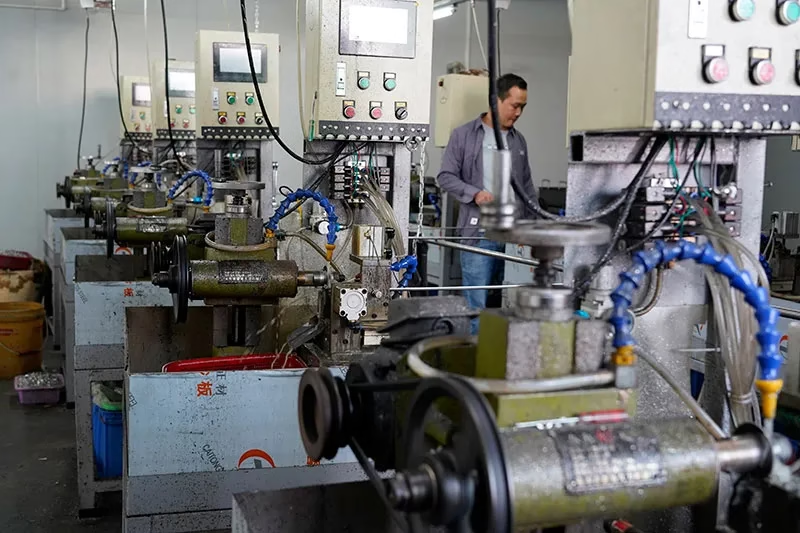
How Private Label Stainless Steel Jewelry Is Made
Although private-label jewellery often uses existing or semi-custom designs, the manufacturing process still adheres to strict technical and quality standards to ensure reliability and consistency.
Precision Laser Cutting
Stainless steel components are produced using advanced fibre laser cutting technology, which allows for:
- High-dimensional accuracy
- Clean cutting edges
- Minimal material deformation
This process is suitable for stainless steel sheets ranging from approximately 0.4mm to 4mm in thickness, making it ideal for rings, pendants, charms, bracelets, and structural jewellery components.
Optimised Material Utilisation
Efficient use of raw materials is essential for stable quality and cost control.
During the cutting stage:
- Components are carefully arranged on steel sheets
- Cutting paths are optimised to minimise waste
- Material loss is reduced without compromising strength or durability
This approach supports consistent pricing and sustainable production practices.
Polishing and Surface Finishing
After cutting, components go through multiple finishing steps, including:
- Edge smoothing for comfort
- Machine or hand polishing
- Mirror, matte, or brushed surface treatments
Proper finishing improves both appearance and long-term wearability, especially for jewellery intended for daily use.
PVD Coating for Long-Lasting Colour
To achieve durable colour finishes, most stainless steel jewellery uses PVD (Physical Vapour Deposition) coating.
Compared with traditional electroplating, PVD coating is:
- More resistant to fading
- Better bonded to the metal surface
- More durable under daily wear conditions
Common finishes include gold-tone, rose gold, black, and natural stainless steel.
Logo Engraving and Brand Customisation
For private label programs, branding is typically applied through laser engraving, commonly placed on:
- Inner rings
- Clasps
- Pendant backs
Laser engraving provides a clean, permanent logo without damaging the surface or coating.
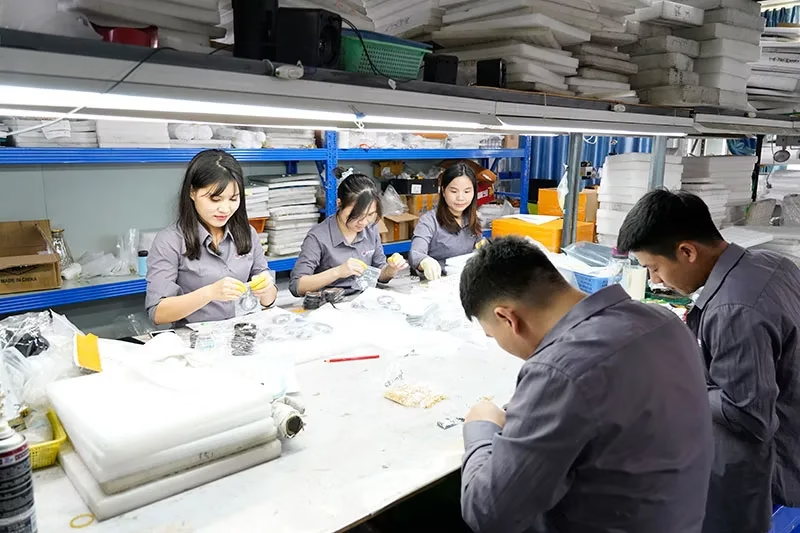
Quality Control and Final Inspection
Before packaging, finished pieces are inspected to ensure:
- Smooth surfaces and edges
- Accurate sizing and alignment
- Consistent color and finish
- Structural integrity
Only products that meet quality standards proceed to final packing and shipment.
Stainless Steel Materials Explained: 304 vs 316L
Material selection plays a critical role in comfort, durability, and customer satisfaction.
304 Stainless Steel
304 stainless steel is widely used in many industrial and consumer applications. In jewellery, it may be suitable for designs with limited skin contact or lighter wear requirements.
316L Surgical Grade Stainless Steel
316L stainless steel offers enhanced corrosion resistance and is widely considered suitable for sensitive skin. It performs better in humid environments and under frequent wear, making it the preferred choice for most private-label jewellery brands targeting international markets.
Key Benefits of Private Label Stainless Steel Jewellery
Private-label stainless steel jewellery strikes a strong balance between performance and cost.
Cost-Effective and Scalable
Lower material and production costs allow brands to start with smaller order quantities and scale as demand grows.
Long-Lasting Appearance
With proper finishing and PVD coating, stainless steel jewellery maintains its colour and shine over extended periods of use.
Suitable for Sensitive Skin
316L stainless steel is widely regarded as skin-friendly, helping reduce customer complaints and returns.
Durable for Daily Wear
Stainless steel is resistant to corrosion, deformation, and general wear, making it suitable for long-term, everyday use.
Flexible Design Options
The material supports a wide range of modern, minimalist, and statement jewellery designs.
Market Positioning: From Accessible to Demi-Fine Jewellery
Although stainless steel jewellery is often associated with affordability, many brands successfully position it in the accessible luxury or demi-fine jewellery segment by focusing on:
- Original and consistent design
- Reliable quality standards
- Clear brand positioning
- Thoughtful packaging and storytelling
Material choice alone does not define brand value—design, quality, and branding do.
Common Misconceptions About Stainless Steel Jewellery
“Titanium Steel” vs Titanium Alloy
In the jewellery market, many products labelled as “titanium steel” are actually made from 316L stainless steel, not true titanium alloy. Transparent material disclosure is a key indicator of a reliable supplier.
Low-Quality Alloys and Skin Sensitivity
Low-cost alloys may contain excessive nickel or other elements that can irritate sensitive skin. Working with experienced manufacturers and verified materials helps reduce this risk.
Why Brands Choose Private Label Stainless Steel Jewellery
Private labelling allows brands to:
- Enter the market quickly
- Reduce development risk
- Maintain control over brand identity
- Adapt efficiently to changing trends
It has become a proven strategy for jewellery startups, online sellers, and established fashion brands alike.
Looking for a Private Label Stainless Steel Jewellery Manufacturer?
If you are planning to launch or expand your jewellery brand, partnering with an experienced private label stainless steel jewellery manufacturer helps ensure:
- Transparent material sourcing
- Stable and consistent quality
- Reliable production timelines
- Scalable manufacturing support
👉 Learn more about our private label stainless steel jewellery manufacturing services
👉 Request free samples or a custom quote today

With over 10 years of experience in the stainless steel jewelry industry, Lydia Ling brings deep industry knowledge and hands-on market expertise to her role. As an accomplished Sales Manager, she has a strong understanding of product development, manufacturing processes, and global customer needs. Through the company blog, Lydia shares practical insights and industry know-how to help readers better understand stainless steel jewelry and make informed business decisions.