While aesthetic design is undoubtedly the primary factor attracting potential customers to beachwear and resort-wear brands, it is exceptional durability—and that alone—that truly builds a brand’s enduring reputation.
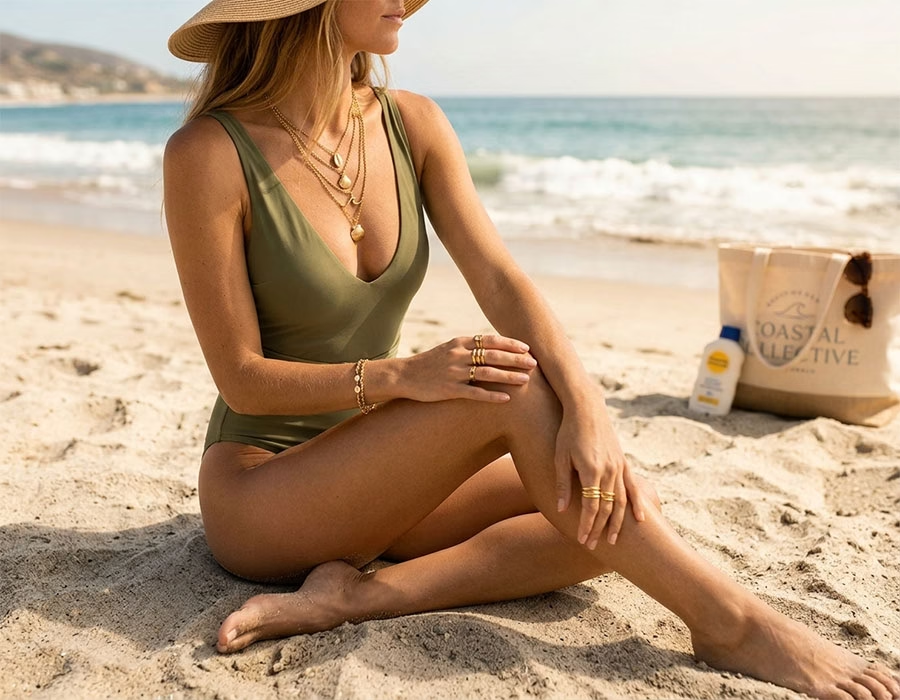
Just imagine this scenario: Your customer is wearing the season’s best-selling bikini, perfectly accessorized with a beautifully layered stack of necklaces. Yet, after spending just one leisurely day at the beach—taking several dips in the ocean and reapplying sunscreen throughout the day—she is dismayed to discover that her “gold” necklaces have lost their luster, begun to tarnish, or even left unsightly green marks on her neck. In that very moment, she perceives this not merely as a flaw in the jewelry itself, but as a complete ruin of her entire brand experience.
For this very reason, most professional buyers and boutique owners today are moving away from low-end brass fashion jewelry, opting instead to curate collections featuring high-performance, fade-resistant jewelry crafted with PVD technology.
Why the Beach is “Hell” for Traditional Jewelry
Coastal environments are a nightmare for standard gold-plating processes. Unlike everyday office attire, beach accessories face three relentless threats:
- Seawater corrosion: Sodium chloride is highly corrosive and can erode a thin plating layer within hours.
- Chemical Reactions: Sunscreen, tanning oil, and chlorine in hotel pools act as solvents, directly dissolving the metal’s surface luster.
- Abrasive Factors: Fine sand acts like sandpaper, creating microscopic scratches on soft surfaces and exposing the underlying metal.
From a Sourcing Perspective: If your jewelry cannot withstand the test of the sea, you’ll face a flood of returns and negative reviews. By choosing certified, fade-resistant jewelry, you’re selling more than just an accessory; you’re selling a truly enduring “beach-to-bar” lifestyle.
The Professional Buyer’s Cheat Sheet: What “Non-Tarnish” Actually Means
In the B2B world, “non-tarnish” is often thrown around as a marketing buzzword. To protect your brand, you need to look at the technical specs behind the claim.
1. The Foundation: 316L Surgical Grade Stainless Steel
Stop considering brass or alloys. 316L stainless steel is the gold standard for waterproof jewelry. It is naturally rust-resistant, hypoallergenic, and durable enough to withstand the test of ocean waves.
2. The Finish: PVD (Physical Vapor Deposition) Coating
Traditional electroplating is a chemical immersion process. PVD coating, however, forms molecular bonds via physical vapor deposition in a vacuum. This process significantly increases surface hardness and enhances corrosion resistance. When you choose 18K PVD gold-plated jewelry, the pieces you offer will not peel or flake, even when exposed to sweat, sand, and seawater.
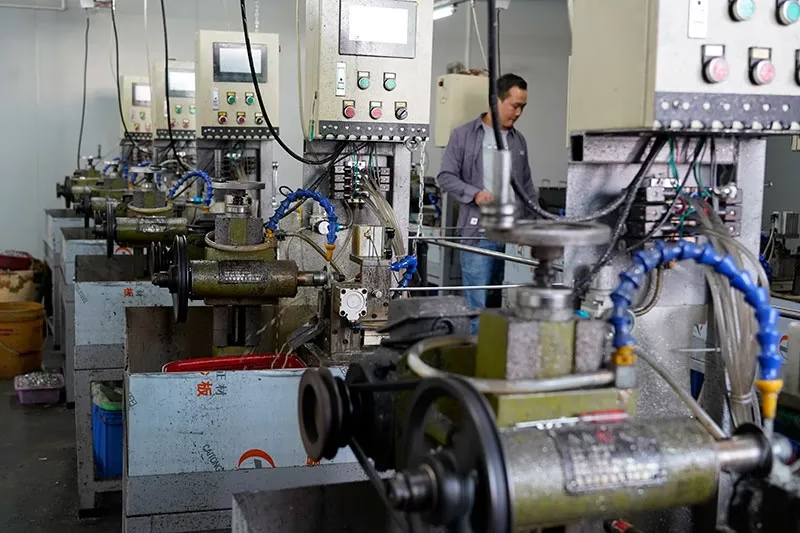
Jinyuan Purchasing Tip: Don’t rely solely on the supplier’s word. Request a salt spray test report and verify the micrometer thickness of the gold plating. Genuine tarnish-resistant jewelry should withstand at least 48 hours of simulated marine environment testing.
High-Margin Essentials for Your Resort Collection
Jewelry is the ultimate accessory to elevate a swimwear look. Here are the key factors currently driving average order value (AOV) growth for top resort brands:
- Waterproof anklets: The soul of beach style. Since they’re most vulnerable to sand and saltwater, resistance to discoloration is essential.
- Layered “ocean-proof” necklaces: Delicate chain designs that can be worn while surfing in the ocean.
- Eye-catching hoop earrings: Lightweight, hollow tube designs that exude high-end style without weighing down the wearer during activities.
- Coastal-inspired elements: Designs featuring shells, waves, and pearls resonate emotionally with travelers and vacationers.
Sourcing Without the “AI Noise”
We know the market is flooded with vague claims of “water resistance.” At Jinyuan Jewelry, we stand out through transparency. We don’t just manufacture jewelry—we’re dedicated to designing pieces for real-life use.
Whether you’re seeking OEM/ODM manufacturing or planning a ready-to-ship wholesale collection, your focus should be on the product’s technical quality. We use 316L stainless steel and PVD coating technology, specifically designed for the North American and European markets, where consumers not only demand but are also willing to pay for long-lasting durability.
Conclusion: Protecting Your Reputation
In the highly competitive beachwear industry, your reputation is inextricably linked to the durability of your products. Switching to fade-resistant jewelry is not just a product upgrade—it’s a safeguard for your brand image.
Stop selling jewelry that loses its luster after just one vacation. Invest in pieces that will stand the test of time, just like your customers’ summer memories.
With over 10 years of experience in the stainless steel jewelry industry, Lydia Ling brings deep industry knowledge and hands-on market expertise to her role. As an accomplished Sales Manager, she has a strong understanding of product development, manufacturing processes, and global customer needs. Through the company blog, Lydia shares practical insights and industry know-how to help readers better understand stainless steel jewelry and make informed business decisions.