In today’s highly competitive athleisure market, your customers wear your apparel to the gym and beyond – including to coffee shops, hiking, and after taking a shower. The “all day” lifestyle has made jewelry an integral part of an activewear “uniform”.
However, here is the undeniable truth: sweat is a form of chemical warfare against jewelry. If you are a product developer or a brand owner, you understand that a “pretty” piece of jewelry can become an extremely negative experience if it turns the consumer’s skin green after one hot yoga class. To help you create a collection of performance-based jewelry that withstands sweat, here is the ultimate guide to designing and sourcing it.
1. The Science of the “Green Mark”: Why Traditional Jewelry Fails
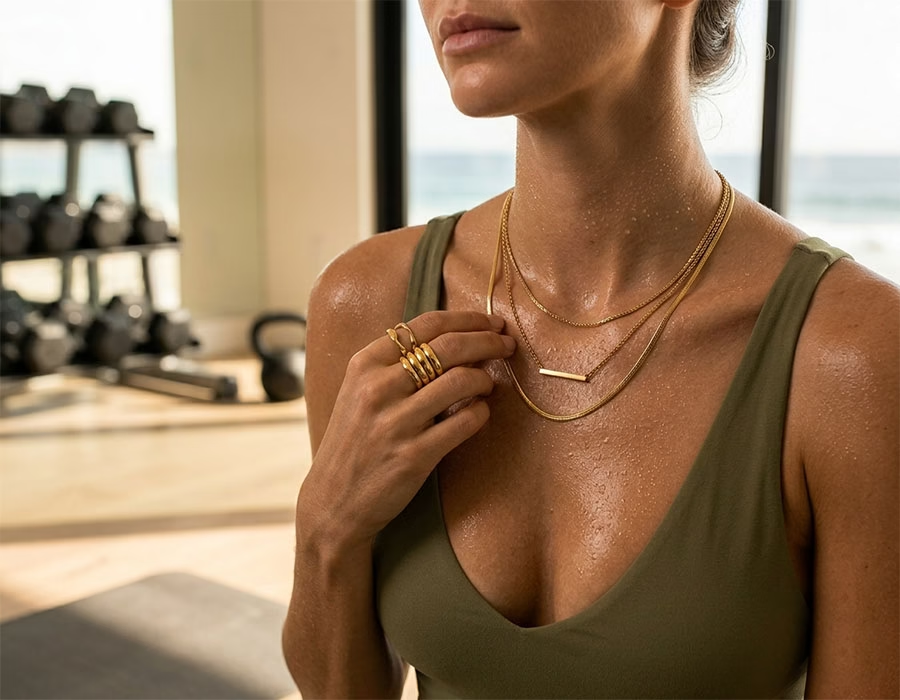
To design better products, we must first understand the “enemy.” Human sweat is not just water; it is a corrosive mixture of salts, urea, and ammonia. When these acidic substances come into contact with non-precious metals such as brass, copper, or low-grade alloys, they trigger an electrolytic reaction.
What’s the result? The plating peels off, the metal oxidizes, and your brand’s reputation will be tarnished along with the jewelry. For activewear brands, “waterproof” is just a marketing term, but “sweat-resistant” is a fundamental requirement of materials science.
2. Base Metals: The Foundation of Performance
Material selection determines 80% of your product’s durability. When sourcing for activewear, forget about zinc alloys or brass. You need materials that are chemically inert.
- 316L Surgical-Grade Stainless Steel: This is the undisputed king of the sports jewelry industry. It is dense and scratch-resistant, and it contains chromium, which forms a self-healing oxide layer that effectively prevents sweat from reaching the metal core.
- Titanium: If your brand is positioned as “ultra-lightweight” or “high-performance,” titanium is the top choice. It is 100% hypoallergenic, and its strength-to-weight ratio complements your high-tech compression fabrics perfectly.
Expert Procurement Tip: Be sure to specify 316L stainless steel rather than 304 stainless steel. The letter “L” stands for low carbon, which effectively resists localized corrosion caused by high-salt sweat.
3. The Gold Standard: Why PVD Coating is Non-Negotiable
You often see suppliers use the term “gold plating.” However, in high-friction, high-humidity environments, standard electroplating processes often fail within a matter of weeks.
For athletic apparel, you must specify PVD (Physical Vapor Deposition) coating.
Unlike traditional immersion plating processes, PVD is performed in a vacuum chamber, where gold is vaporized and bonds with the base metal at the molecular level. This does not simply form a layer on the metal surface; rather, it becomes an integral part of the surface.
- Durability: PVD is 10 times more durable than standard electroplating.
- Eco-Friendly: The process produces zero chemical emissions, aligning with the sustainability goals of modern athletic apparel brands.
- Friction-Resistance: The coating will not peel off, even when rubbed against sports bras or during repetitive movements such as running.
Check out our technical breakdown of PVD Gold Plating vs. Traditional Methods to see why this is the only choice for fitness brands.
4. Design Techniques to Eliminate “Moisture Traps.”
Design is not just about appearance; it’s also about hygiene and structural integrity. Sweat-resistant jewelry should be designed to be “easy to rinse.”
- Sealed Construction: Avoid hollow designs with small holes to prevent sweat and bacterial buildup. We recommend designs made of solid 316L stainless steel, which are easy to wipe clean.
- Bezel Over Prongs: If the design includes gemstones, opt for a bezel setting. Prong settings can easily snag on mesh leggings or athletic tops, creating crevices where salt crystals accumulate.
- Laser-Welded Joints: Traditional soldering uses lead- or tin-based fillers that may react with sweat. At Jinyuan Jewelry, we use laser welding technology to fuse the metals, creating a seamless, airtight bond.
5. Vetting Your Manufacturer: The “Sweat-Test.”
As a professional buyer, you should not take “waterproof” claims at face value. Before confirming a bulk order, request the following three tests:
- Salt Spray Test (ASTM B117): Can the product withstand a simulated saltwater environment for more than 48 hours?
- Friction Test: Can the PVD coating withstand more than 500 abrasion cycles?
- Nickel Release Test: Even when the substrate is steel, poor-quality coatings may still contain nickel. Ensure compliance with international safety standards.
Conclusion: Say Goodbye to the “Disposable” Era
Today’s fitness consumers are discerning. They’re tired of “disposable” accessories that last only one summer before ending up in landfills. By designing with 316L stainless steel and PVD coatings, you’re selling more than just an accessory—you’re offering performance gear that’s just as durable as your athletic apparel.
At Jinyuan Jewelry, we have helped dozens of European and American fitness brands elevate their accessories from fashion-grade to performance-grade. We don’t just manufacture; we are dedicated to designing for sports.

Emily Tan brings over 12 years of experience in the stainless steel jewelry industry, combining deep product knowledge with keen market insight. Fluent in English and French, she excels at connecting with international clients and driving business growth. As a talented sales manager and company blogger, Emily shares practical industry insights and valuable guidance, earning the admiration of readers and professionals alike.