Finding the right steel jewelry supplier is a make-or-break decision for your brand. In this business, your manufacturer completely dictates your product consistency, your reputation, and ultimately, your bottom line.
If you are running a growing jewelry brand, a private label, or a fast-scaling e-commerce store, you will quickly realize that giant factory conglomerates are not always a good fit. They hit you with massive Minimum Order Quantities (MOQs) and treat your account like a numbers game. On the flip side, sketchy trading companies cannot hold a candle to real quality control or hard deadlines.
The sweet spot? Partnering with a specialized, highly flexible mid-sized factory that brings industrial-grade machinery to the table without losing that hands-on, owner-managed oversight. Here is a straight-from-the-factory-floor checklist to help you spot a premium steel jewelry partner who will actually back your growth.
1. 100% In-House Production (Say No to the Middleman Runaround)
The global stainless steel jewelry market is flooded with trading companies masquerading as direct factories. When you are trying to scale a brand, the last thing you need is a middleman markup or a vendor who secretly outsources your intellectual property to unverified backyard workshops.
When you audit a supplier, make sure they actually own and run their entire setup from start to finish:
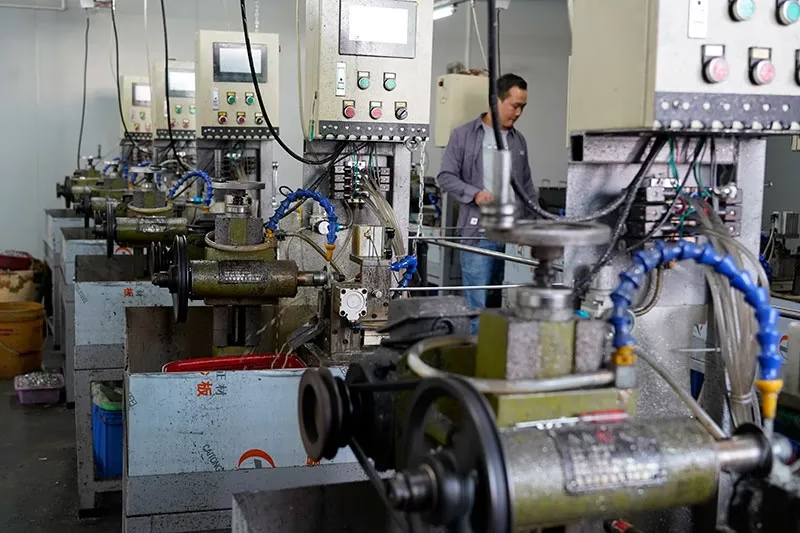
- The Right Heavy Hardware: Ask for proof of on-site CNC machining centers, high-pressure casting lines, and fiber laser engraving equipment. If they dodge the question, step away.
- A Frictionless, Fast-Track Workflow: A lean, tight engineering crew moves miles faster than a bloated corporation. Look for a team that runs 3D CAD modeling, rapid physical prototyping, and mass production under one single roof.
- Built to Bring Custom Ideas to Life: A world-class partner does not just push generic, off-the-shelf stock from the public catalog. They have the technical chops to take your custom blueprints and build proprietary collections using advanced OEM/ODM Manufacturing Capabilities.
The Boutique Specialist Advantage: Going with an agile, specialist factory crew is a total cheat code for growing brands. We are nimble enough to treat your custom designs as a top priority, flexible enough to offer realistic 100-piece MOQs, yet fully geared up to scale output as your sales numbers climb.
2. Zero-Fluff Material Honesty and Traceability
The best industrial steel manufacturers do not hide behind sketchy buzzwords like “premium metal alloy” or “luxury fashion steel.” They give you the exact material grades, chemical specs, and plating breakdowns straight up—no games played.
The Real Technical Specs You Need to See
- 316L Surgical-Grade Stainless Steel: This is the absolute gold standard for high-end fashion jewelry. It is incredibly tough, corrosion-resistant, and strictly hypoallergenic (with low nickel release), meaning it will never irritate your customers’ skin.
- 304 Stainless Steel: A solid, heavy-duty option for basic structural components, but it lacks the chemical resistance of 316L. For a brutal, honest breakdown of when to use which, check out our 316L vs 304 Stainless Steel Jewelry Full Guide.
- High-Performance PVD Vacuum Plating: We are not talking about cheap chemical dips here. Real physical vapor deposition molecularly bonds real 18K gold, rose gold, or gunmetal black to the steel base. Top-tier vendors keep this layer at a precise 0.03 to 0.08 microns, backed by a passivated oxide layer and a clear electrophoretic protective e-coating to lock out moisture and prevent everyday scratches.
A legitimate manufacturer will hand over material composition sheets or independent third-party testing reports (like SGS, RoHS, or REACH compliance) without you having to pull teeth to get them.
B2B Cheat Sheet: Premium Factories vs. Trading Outlets
| Sourcing Metric | High-Quality Specialist Factory | Trading Company / Middleman |
| Floor Control | Direct ownership; core team runs CNC milling, casting, and polishing on-site. | Outsources to random, low-end workshops; zero clue what happens on the floor. |
| Material Honesty | Tells you exactly what you are getting (316L vs. 304) and backs it with real test reports. | Uses fluff words like “high-grade metal”; vanishes when you ask for chemical specs. |
| OEM/ODM Prototyping | In-house CAD engineers handle adjustments; physical samples ready in 10 to 15 days. | Cannot open custom molds to save their life; forces you to buy generic public stock. |
| Plating Longevity | Real PVD vacuum chamber plating with multi-layer anti-tarnish barriers. | Cheap chemical flash plating that wears off or turns skin green within two weeks. |
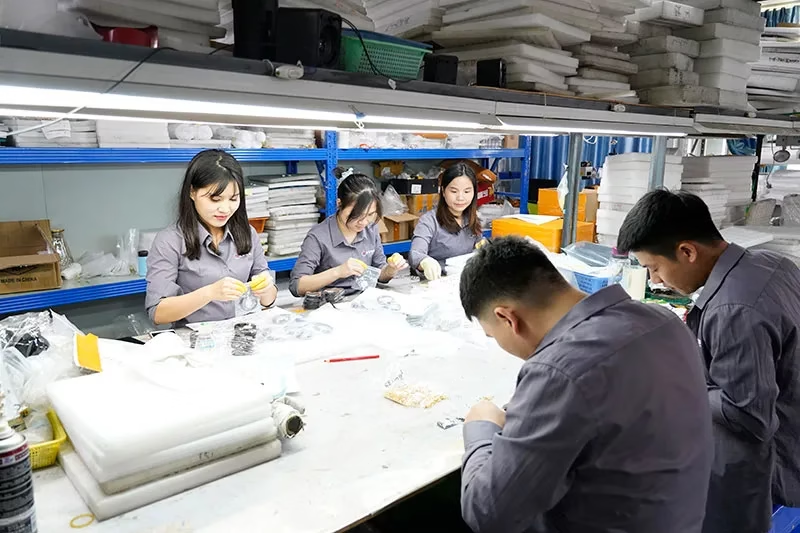
| QC Game Plan | Owner-backed, floor-level quality checks at every single step of the build. | Quick visual glance while throwing items into boxes; relies on verbal promises. |
3. The Counter-Intuitive Truth About Pricing
Let’s cut to the chase on a hard truth that cheap vendors love to sweep under the rug: If a unit price looks too good to be true, it is a ticking financial time bomb for your brand, not a bargain.
When a factory drops a dirt-cheap quote for steel jewelry, they are not eating into their own profits—they are hacking away at your product quality. They do this by using low-purity, contaminated scrap steel that leaves microscopic air bubbles inside the metal structure, rushing the hand-polishing phase, or running lightning-fast PVD cycles that leave a paper-thin, unstable plating layer.
- Low-Cost Sourcing Strategy: Leads to High Defect Rates, which leads to Nightmare Returns, and ultimately ends in a Dead Brand Reputation.
- Premium Sourcing Strategy: Powered by a Sharp QC Engine, which leads to Flawless Batches, and creates Customers for Life.
A high-quality boutique factory charges a transparent, sustainable price because they pay for top-grade raw materials, skilled hand-bench artisans, and real QC equipment. Forking over a fair price upfront completely immunizes your brand against massive batch defects, missed launch deadlines, and angry 1-star customer reviews. If you are currently wading through supplier quotes, do yourself a favor and read our breakdown on How to Choose a Stainless Steel Jewelry Supplier: A Practical Guide for Jewelry Brands before you wire any money.
4. Hardcore, Floor-Level QC Discipline
True consistency across mass production runs is what separates real industrial plants from casual assembly lines. Premium steel jewelry manufacturers do not just do a frantic final check right before closing the shipping boxes. They bake quality assurance right into the manufacturing process.
The Standard B2B Quality Checklist
- Incoming Material Audits: Checking raw steel purity, bar hardness, and surface flaws before the metal ever touches a machine tool.
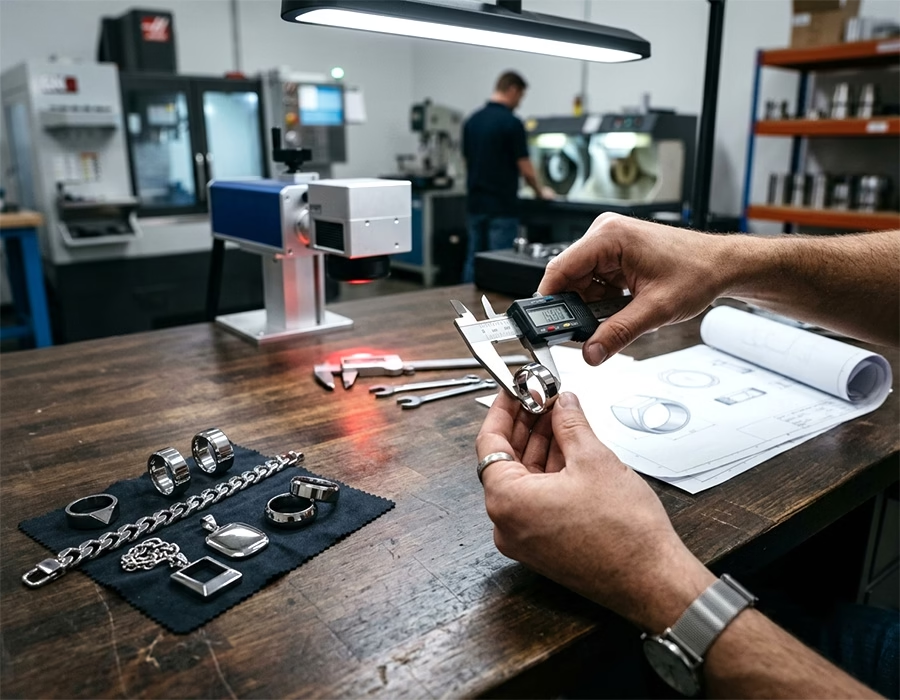
- In-Process Precision Checks: Continuous dimensional monitoring and tolerance tracking using high-precision digital calipers during CNC milling or casting phases.
- Surface Defect Filtering: Aggressive post-polishing inspections under high-intensity lighting to wipe out micro-scratches, pinholes, or uneven buffing marks.
- Plating and Adhesion Stress Tests: Testing batch color consistency under standard lighting and running cross-hatch tape adhesion tests to make sure that PVD gold layer stays locked onto the steel under heavy friction.
The Action Plan: How to Vet Your Next Vendor Like a Pro
Before you drop a heavy deposit on a bulk production run, protect your capital by executing this exact testing protocol:
- Test Their Technical Agility: Drop a complex 3D file or a challenging technical layout into their inbox. A real OEM/ODM steel supplier will send back sharp CAD adjustments and a physical, hand-finished sample within 10 to 15 days.
- Check Their Communication Speed: Make sure you get a dedicated account manager who speaks fluent technical English and can actually answer hard machining or tolerance questions within 12 to 24 hours. If they need to “ask the boss” for every basic question, move on.
- Verify Their Export Track Record: Confirm they know how to ship high-volume logistics straight into your main markets (US, EU, or Asia) without customs hang-ups, and that they completely understand international safety compliance laws.
- Put Them to the Test with a Trial Run: Start with a smaller initial order to grade their lead-time reliability (look for a reliable 3 to 6 weeks for bulk goods), packaging protection, and batch-to-batch replication.
Frequently Asked Questions (FAQ)
How can I spot a real steel jewelry factory vs. a trading company masquerading as one?
A real factory will gladly hop on a live video call to show you their production floor, active CNC machinery, and internal QC setups on the spot. They also welcome custom OEM/ODM mold requests because they have the engineers to build them. Trading companies will dodge live video calls, give vague answers about how the machines operate, try to push you toward their in-stock catalog, and usually operate out of a commercial office building rather than an industrial zone.
Why is 316L stainless steel considered non-negotiable for premium jewelry?
While standard 304 stainless steel is great for kitchenware or industrial parts, 316L (medical-grade) steel contains molybdenum. This extra element gives it a massive boost against corrosion from sweat, seawater, and daily lotions. More importantly, 316L has an incredibly tight molecular structure with an ultra-low nickel release rate, making it fully compliant with international hypoallergenic standards like the EU Nickel Directive.
What is the normal turnaround time for a custom B2B steel jewelry order?
For a professional, well-organized factory, the standard timeline breaks down like this:
- Sampling Phase: 10 to 15 days for CAD revisions and physical sample production.
- Bulk Mass Production: 3 to 6 weeks, depending on design complexity, whether we need to open custom molds, and your total order volume.
Why does batch-to-batch consistency make or break private label jewelry brands?
Stainless steel is a dense, unforgiving metal that requires highly precise tooling, exact heat levels, and meticulous polishing formulas. If a vendor lacks repeatable, automated processes, your mass-produced bulk order will look nothing like the flawless sample you approved. Inconsistent buffing, slight sizing shifts, or off-color plating shades will ruin your customer experience, spike your return rates, and tank your brand equity overnight.
How do top steel suppliers guarantee their jewelry won’t fade or cause skin irritation?
Premium factories eliminate skin irritation by using verified, lead-free, and cadmium-free 316L surgical steel as the base metal. To guarantee a non-tarnish finish, they run the pieces through high-tech PVD vacuum chambers to fuse a dense layer of real gold directly into the surface of the steel. This is followed by a passivated layer and an electrophoretic coating that locks out air, moisture, and sweat for long-term daily wear.

Emily Tan brings over 12 years of experience in the stainless steel jewelry industry, combining deep product knowledge with keen market insight. Fluent in English and French, she excels at connecting with international clients and driving business growth. As a talented sales manager and company blogger, Emily shares practical industry insights and valuable guidance, earning the admiration of readers and professionals alike.