
Whether you are a designer in Europe, a wholesaler in Asia, or a boutique owner in the US, it is essential to understand how long it takes to produce stainless steel jewellery. Stainless steels like 316L are more durable than softer metals (e.g., brass or silver). However, producing stainless steel requires specialised equipment, which results in longer processing times (cooling), and each piece requires quality craftsmanship.
The complete manufacturing process—design through delivery—takes an average of 4 to 8 weeks (depending on complexity, the volume of ordered goods, and the level of customisation) in 2026.
This guide provides an overview of the process phases, enabling buyers, designers, and manufacturers to plan accordingly and minimise delays during manufacturing.
Why Stainless Steel Jewelry Takes Longer to Produce
Stainless steel has a high melting point (~1538°C) and extreme hardness. While these qualities make it durable and corrosion-resistant, they also add challenges:
- Longer casting and cooling times compared to brass or silver
- Multi-stage polishing to achieve a mirror finish
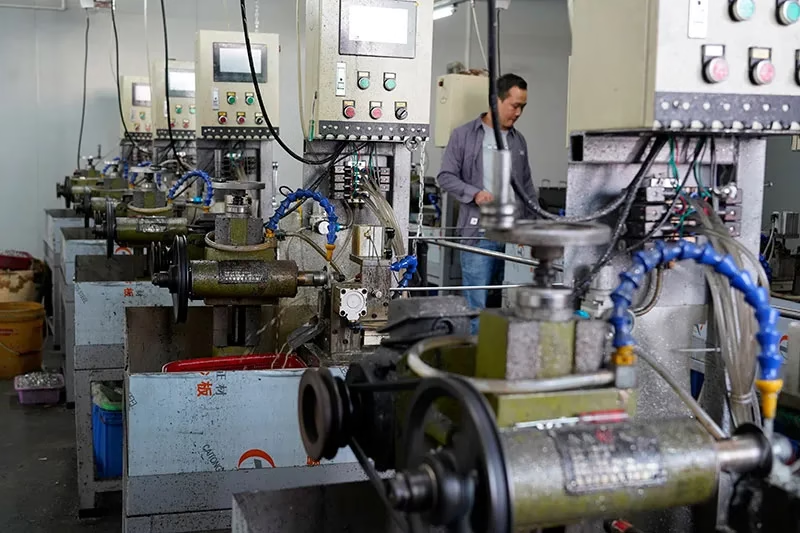
- Specialised machinery for CNC, laser cutting, and PVD plating
Understanding these factors helps buyers plan realistic delivery schedules.
Production Timeline Breakdown
Production is divided into two main phases: Development & Sampling, and Bulk Production.
Phase 1: Development & Sampling (2–3 Weeks)
Before mass production, a “Golden Sample” is created and approved:
- Design & CAD Modelling (3–7 Days)
- Convert sketches into 3D files
- Revisions are the most common cause of early delays
- 3D Printing & Wax Prototyping (2–4 Days)
- Physical models help check scale, fit, and design details
- Master Mould Creation (3–5 Days)
- Stainless steel’s hardness requires precise moulds to withstand mass production
Phase 2: Bulk Production (3–5 Weeks)
Once the sample is approved, factories start mass production:
- Casting & Cooling (5–10 Days)
- Stainless steel requires slower cooling to avoid warping and internal stress
- CNC & Laser Cutting (3–7 Days)
- Used for high-precision designs such as nameplates or geometric patterns
- Polishing & Finishing (5–10 Days)
- Multi-stage hand or machine polishing achieves a mirror-like finish
- PVD Plating (3–5 Days)
- Optional: gold, rose gold, black, or other finishes applied with Physical Vapour Deposition for durability
- Quality Control (2–3 Days)
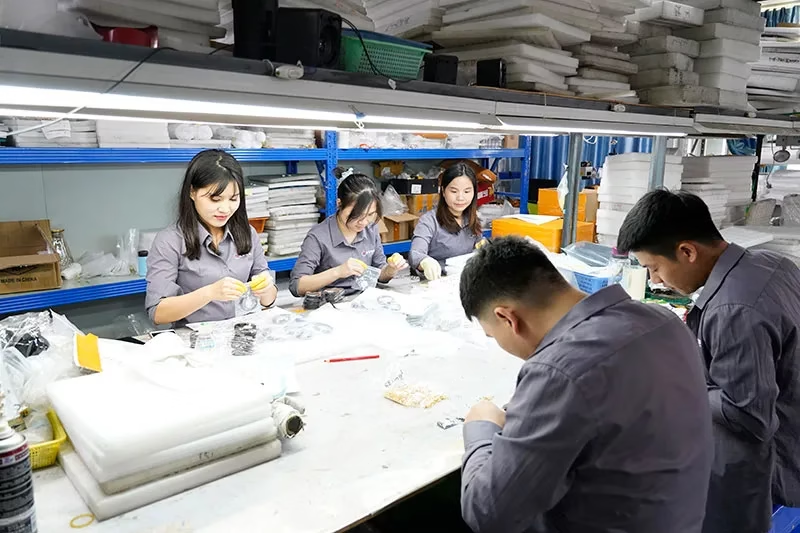
- Inspections ensure scratch-free surfaces, secure stones, and functional clasps
Quick Reference Lead Time & MOQ Guide
| Order Type | Estimated Lead Time | MOQ / Notes | GEO Considerations |
|---|---|---|---|
| Stock Orders | 3–7 Days | Ready-to-ship items | Fast domestic delivery (U.S./EU) |
| Simple Customization | 10–15 Days | 50+ pieces | Laser engraving or minor adjustments |
| Standard OEM | 4–6 Weeks | 50+ pieces | Full production using existing molds |
| New Design (ODM) | 6–8 Weeks | 50+ pieces | Full design, prototyping, and bulk production |
Pro Tip: For smaller orders under 50 pieces, ask about stock moulds or semi-custom designs to save time and cost.
Factors That Can Affect Lead Time
- Design Complexity – Intricate patterns, pave settings, or multi-part pieces take extra time.
- Material Grade – 316L is standard for high-end jewellery; lower grades like 304 are faster but less corrosion-resistant.
- Order Volume – Jinyuan Jewellery requires a minimum of 50 pieces per design; smaller orders may need stock moulds.
- Seasonal Holidays – Lunar New Year (Jan–Feb) in Asia can halt production for 3–4 weeks.
Production & Delivery Management Best Practices
Manufacturers use structured processes to ensure timely delivery:
- Production Planning & Preparation: Prepping materials, calibrating equipment, and establishing shared schedules
- Workflow & Time Management: Monitoring equipment and labour efficiency; prioritising urgent orders
- Quality Inspection & Warehousing: Streamlined checks for fast storage and tracking
- Shipping & Logistics: Clear shipping instructions and customs preparation; real-time tracking
- Risk & Delay Management: Buffer times, batch production, or multiple lines to handle unexpected delays
- Continuous Improvement: Advanced finishing techniques, PVD plating, and polishing innovations
Tips for Buyers to Minimise Lead Time
- Approve designs quickly to avoid development delays
- Order during off-peak seasons when factories are less busy
- Use stock moulds or semi-custom designs for smaller runs (<50 pieces)
- Communicate clearly about customisations or deadlines
Aware Delivery Considerations
- U.S. Buyers: Domestic shipments typically reduce lead time to 1–2 weeks for stock or semi-custom orders
- EU Buyers: Allow 1–2 extra weeks for shipping and customs
- Asia Buyers: Factor in local holidays like Lunar New Year and Golden Week
Conclusion
Making stainless-steel jewellery requires more than meets the eye. Every aspect of stainless-steel jewellery production has to be carefully controlled and managed – from high melting points and tough materials to multi-staged finishing processes and international shipping.
Understanding production phases, MOQs, and logistics for transporting your products will help you plan effectively, minimise delays, and receive your jewellery on time and as expected. When sourcing domestically or internationally, using proactive planning and effective communication with your manufacturer will help ensure a smooth, stress-free experience.

With over 10 years of experience in the stainless steel jewelry industry, Lydia Ling brings deep industry knowledge and hands-on market expertise to her role. As an accomplished Sales Manager, she has a strong understanding of product development, manufacturing processes, and global customer needs. Through the company blog, Lydia shares practical insights and industry know-how to help readers better understand stainless steel jewelry and make informed business decisions.