Let’s be honest: To most consumers, “Stainless Steel” is just a label. But for us in the workshop, it’s a minefield. If your current supplier is vaguely promising “high-quality steel” without specifying the grade, they might be setting your brand up for a customer service nightmare.
At Jinyuan Jewelry, we’ve seen too many promising brands fail because they saved a few cents on raw materials, only to have their rings turn dull or cause rashes three months later.
Here is what you actually need to know about the grades driving the jewelry market today.
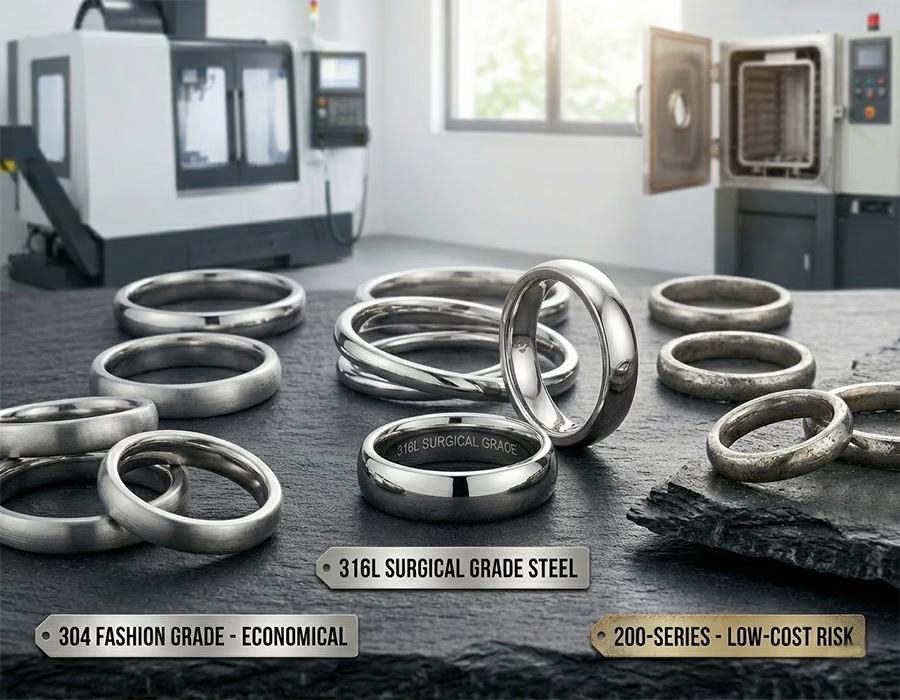
1. 316L Stainless Steel: The “No-Regrets” Grade
In our factory, 316L (Surgical Grade) is the baseline. We don’t negotiate on this for high-end collections.
- The “L” Factor: The “L” stands for Low Carbon. Why does that matter to you? It means when we weld or polish the piece, it maintains its structural integrity. It won’t become brittle or develop microscopic rust spots.
- True Hypoallergenic Security: 316L is what surgeons put inside the human body. If you’re selling to the US or European markets where nickel-release regulations are strict, 316L is your only safe bet to avoid lawsuits and returns.
- The PVD Advantage: 316L has a unique molecular density that grips PVD (Vacuum Plating) better than any other grade. If you want your gold plating to last 2+ years of daily wear, start with 316L.
2. 304 Grade: Great for Chains, Risky for Rings
You will see 304 used everywhere in “fast fashion.” It’s the same steel used in kitchen appliances.
- The Catch: It lacks Molybdenum. Without this, the steel is defenseless against the acidity of human sweat.
- The Use Case: We recommend 304 for thick “oversized” streetwear chains or decorative elements that don’t have constant, pressurized contact with the skin. It’s a smart way to cut costs if applied to the right product.
3. The 201/202 Trap: The Silent Brand Killer
If you find a quote that seems “too good to be true,” it probably is. Many low-cost manufacturers use 200-series steel.
- The Disaster: It looks identical to 316L on the day of delivery. But after 30 days in a humid warehouse or a salty coastal city, it will pit and oxidize. Selling this is the fastest way to kill your brand’s trust.
316L vs. 304 vs. 200-Series: Technical Comparison
| Performance Metric | 316L (Surgical Grade) | 304 (Fashion Grade) | 201/202 (Low-Cost Risk) |
| Skin Safety | 100% Hypoallergenic | Good (Mostly Safe) | High Risk of Irritation |
| Corrosion Resistance | Excellent (Salt & Sweat Proof) | Moderate (Needs Care) | Poor (Rusts Easily) |
| Molybdenum Content | Yes (2-3%) | No | No |
| Plating Longevity | 3-5 Years (Best for PVD) | 1-2 Years | < 6 Months |
| Market Standard | Premium Brands / Luxury | Budget Fashion | Avoid (Fast Fashion Only) |
Beyond the Metal: Why Engineering Matters
In the jewelry world, expertise isn’t just knowing the grade—it’s knowing the process.
At Jinyuan Jewelry, our 316L pieces undergo a multi-stage ultrasonic cleaning before they ever hit the PVD chamber. We don’t just “buy” steel; we verify the batch chemistry. Because we know that when your customer opens that box, they aren’t looking at a “316L technical spec”—they are looking at a piece of jewelry they expect to wear for years.
Is Stainless Steel Better Than 925 Silver?
For the modern, “on-the-go” consumer, the answer is usually yes.
- Zero Maintenance: It won’t turn black like silver.
- Unbeatable Hardness: It doesn’t bend or scratch easily at the gym or work.
- Visual Luxury: With modern CNC polishing, 316L is indistinguishable from White Gold or Platinum.
Stop Guessing. Start Scaling.
Your brand’s longevity is tied to the metal you choose today. Don’t let a lack of technical clarity hold you back.
Whether you’re looking to move your production to 316L or need a partner who understands the nuances of PVD plating, Jinyuan Jewelry is here to bridge the gap between “factory” and “brand.”
With over 10 years of experience in the stainless steel jewelry industry, Lydia Ling brings deep industry knowledge and hands-on market expertise to her role. As an accomplished Sales Manager, she has a strong understanding of product development, manufacturing processes, and global customer needs. Through the company blog, Lydia shares practical insights and industry know-how to help readers better understand stainless steel jewelry and make informed business decisions.