Starting a steel jewelry line or scaling your new brand is a massive milestone. But if you’re navigating the B2B landscape for the first time, you’ll notice that every supplier online claims to be a top manufacturer.
When you work with tight startup capital and a newly registered company, you don’t need a corporate audit team or expensive lab tests. You just need a reliable, direct factory that respects your custom designs, delivers consistent quality, and offers flexible MOQs.
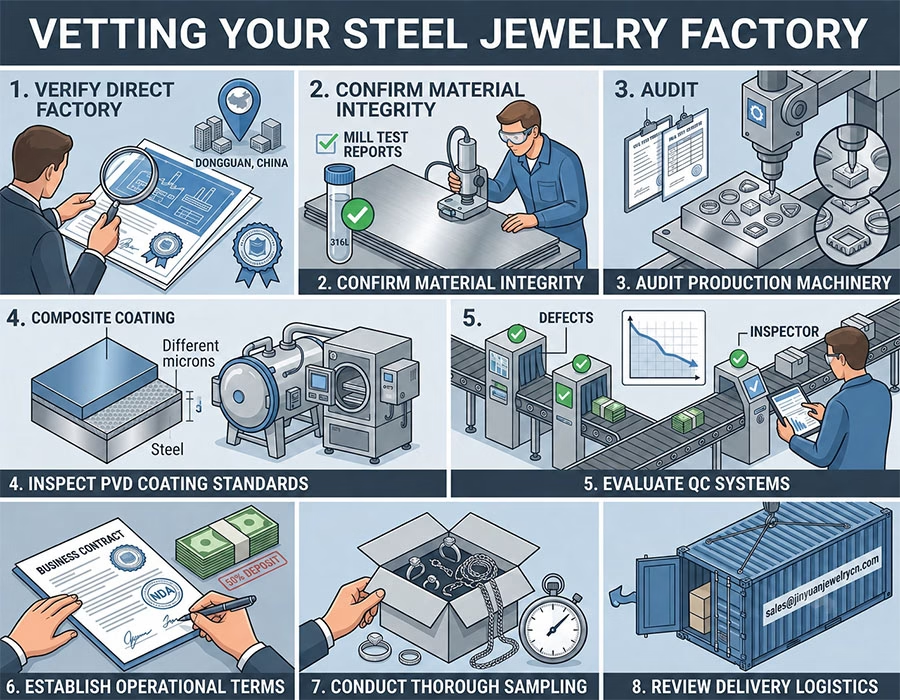
Here is a practical, straightforward framework to verify a steel jewelry factory before sending your first deposit.
1. Spotting the Reality: Factory vs. Trading Broker
You want your supplier to be a direct manufacturer, not a middleman trading company. Trading brokers make their money by adding a markup, and they rarely control the quality of custom orders. For pure customization and exclusive OEM/ODM designs, go straight to the source.
Here is how you catch a middleman without leaving your desk:
- Look at Their Catalog: A real factory usually focuses heavily on one material and one process type—such as steel rings, chains, and earrings. If a catalog is an endless maze of steel rings, plastic sunglasses, and silver plating, it is a trading company sourcing from multiple places.
- The Mobile Video Trick: Ask the sales rep to take a quick, unedited smartphone video of the factory floor or raw materials warehouse while holding a piece of paper with your company name on it. A genuine manufacturer can do this in ten minutes. A broker will make excuses.
- Check the Hub: High-tier, specialized custom steel factories are heavily concentrated in industrial hubs like Dongguan, China. Sourcing right from the heart of the supply chain means better component sourcing, lower production costs, and sharper turnarounds.
When evaluating partners, understanding how to choose a stainless steel jewelry supplier based on manufacturing indicators is your best defense. Top-tier hubs like Dongguan Jinyuan Jewelry: 16 Years’ Ingenuity Shines show how factory infrastructure is rooted in transparency.
2. Low-Cost Material and Finishing Realities
You don’t need expensive lab equipment like ICP-MS machines to protect your brand from bad metals or peeling colors. You just need to know what to ask for and how to test it yourself.
The Metal Base: 316L vs. 304
Low-end suppliers love to use 304 or 201 steel because the raw material costs less. The problem? It can rust, fade, or trigger skin allergies, which ruins your store’s reviews.
Explicitly tell the supplier that your brand guarantees 316L Stainless Steel (Surgical Steel). Once you get your samples, leave them in saltwater for a couple of days. Real 316L comes out completely clean and tarnish-free.
For a deeper look into how these metals act under real manufacturing conditions, check out the ultimate 316L vs. 304 B2B sourcing guide. Verifying these properties is critical because knowing which grade of stainless steel is commonly used in jewelry helps prevent compliance failures in strict markets like the US and EU.
3. Evaluate Plating and Coating Standards
Plating quality decides your return rates. Many low-end suppliers or trading companies will tell you they offer “PVD coating,” but they secretly cut the vacuum furnace time to save costs.
- The Gold Layer Reality: In stainless steel PVD coatings, the actual gold surface layer is typically 0.03 to 0.08 microns thick. Anyone claiming a thick, pure gold layer is lying, as excessively pure gold target material loses adhesion and peels off easily inside a vacuum.
- The Total Layer Secret: A real B2B PVD process relies on a composite layers workflow. The factory first runs a hard, wear-resistant chemical compound base layer (usually Titanium Nitride, TiN) to build durability. They then cap it with the real gold layer.
This specific combination keeps the gold finish perfectly bonded to the 316L steel base during long-term exposure to daily wear. To understand how vacuum engineering creates permanent color, review the step-by-step electroplating & PVD process for stainless steel jewelry.
Machining and Polishing Capabilities
Roughly 80% of steel jewelry defects happen during surface treatment because steel is much tougher to work with than softer metals like silver.
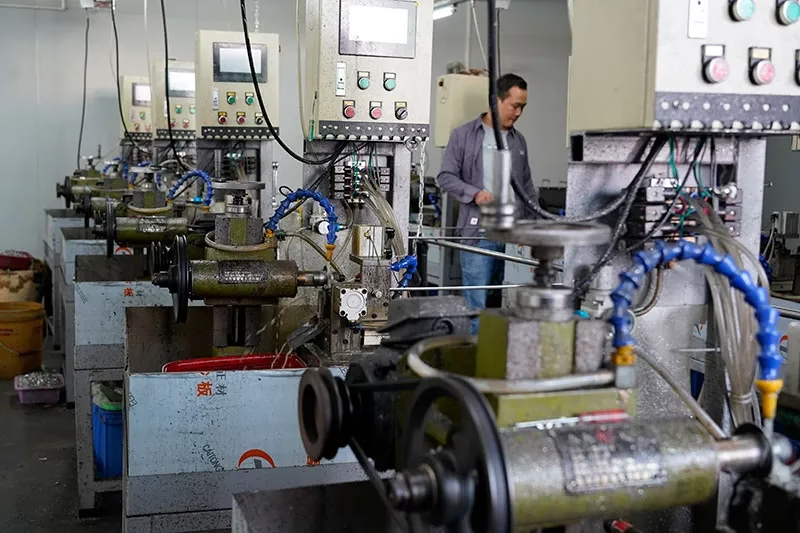
Ask whether they use high-precision CNC machining automation lines or investment casting. If your catalog involves complex, geometric profiles, ensure the factory specializes in high-precision CNC-machined jewelry for luxury brands.
Ask how they achieve a true mirror finish and prevent rough edges or pits on the surface. Working with a team capable of professional jewelry polishing is the only way to achieve a 100% mirror finish and avoid micro-scratches on bulk orders.
4. Navigating the MOQ and Pricing Trap
When you have a newly registered company, cash flow is everything. A factory’s minimum order requirements and pricing structure tell you exactly who they like to work with.
| Sourcing Indicator | The Direct Factory Sweet Spot | Sourcing Red Flags |
| Customization & MOQ | Willing to do custom OEM/ODM molds with reasonable per-SKU minimums (e.g., 50–100 pieces). | Promising full custom branding with “zero MOQ” and shipping cheap off-the-shelf stock items instead. |
| Plating Transparency | Specifies a real vacuum composite PVD process (hard base layer + 0.03–0.08 microns real gold layer). | Claims an unrealistic pure gold layer thickness, or uses vague terms like “gold color.” |
| Pricing Breakdown | Clear, transparent pricing detailing mold fees, base unit costs, and PVD plating costs. | Vague, all-in quotes that change the moment you ask for minor design adjustments. |
| Sample Quality | Delivers physical, structural prototypes based on your tech pack or reference drawings. | Refuses to do custom prototyping or pressures you into paying for a massive bulk order upfront. |
5. Audit the Factory’s Internal Checklist
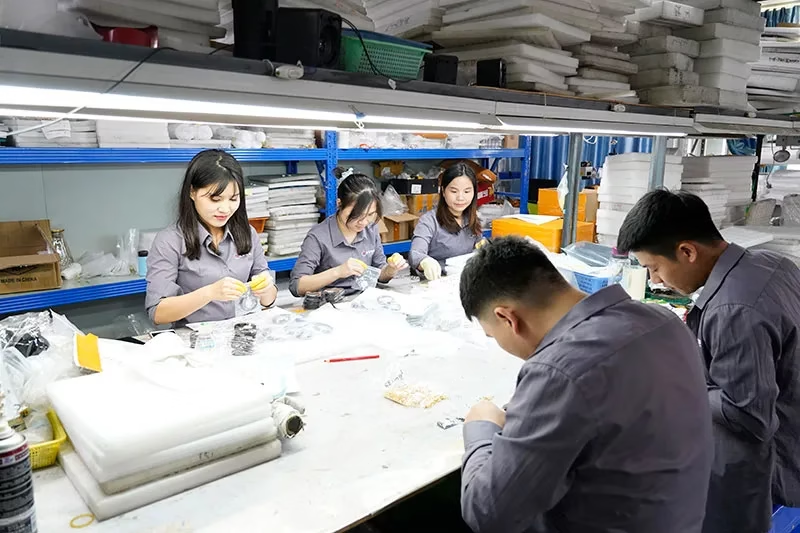
Even without a formal QC department on your end, you should still ensure the factory uses a structured workflow to protect your orders. A reliable production line should follow three distinct check phases to catch mistakes early:
[Raw Materials] ──> (Material Check) ──> [CNC & Production] ──> (In-Process Audit) ──> [Polishing & Plating] ──> (100% Visual Inspection) ──> [Secure Export Packing]
Your onboarding audit should closely align with the complete guide to stainless steel jewelry quality control to ensure standards match the workshop’s output. Auditing this system helps prevent common quality problems in stainless steel jewelry manufacturing.
6. Order and Test Samples Like a Professional
Never order bulk inventory based on beautiful product photos; physical samples tell the truth. Navigating the custom jewelry sample process in China factories requires a clear exchange of 3D CAD files and tolerance limits to ensure the prototype matches your exact specs.
- Test the “Risky” Parts: Don’t just order a basic, flat ring. Put the factory to the test. Order a piece that includes a thin chain, an intricate laser engraving, or a stone setting. This shows you the limits of their true craftsmanship.
- The 14-Day Wear Test: Inspect the surfaces upon sample arrival. Are the edges smooth? Is the polishing a true mirror finish? Once inspected, wear the pieces daily for two weeks. Shower and sweat in them. If the color holds and your skin doesn’t react, the factory passed.
7. Operational Terms and Business Professionalism
A factory’s operational habits and policies give you an early look into how they will handle production cycles and potential crises.
- Check Communication Infrastructure: Professional manufacturing companies will communicate via domain-linked email addresses like
sales@jinyuanjewelrycn.comand assign dedicated B2B account managers who understand blueprints, rather than using generic free email accounts. - Establish a Defects Policy: Before wiring any deposit (typically 50%, with the remaining 50% due after a successful final quality inspection), sign a clear agreement outlining the exact terms for returns, replacements, and refunds for factory defects.
Additionally, map out your retail launch schedule using a comprehensive stainless steel jewelry production lead-time guide to account for mold setup and vacuum-furnace batches.
8. Frequently Asked Questions (FAQ)
We are a newly registered business. Will direct factories work with us?
Yes. Direct manufacturers love growing brands because today’s small startups become tomorrow’s high-volume buyers. Show you are serious. Send a clear image, target dimensions, preferred material (316L steel), and ask for their standard custom sample terms.
How do I protect my original designs from being copied?
Before you send over any original CAD files or detailed sketches, ask the sales team to sign a straightforward Non-Disclosure Agreement (NDA). High-quality custom factories work under strict OEM/ODM setups, value intellectual property, and will not leak your designs.
What is a normal payment structure for a first bulk order?
The industry standard for custom B2B manufacturing is a 50% deposit to start production (covering initial mold and material setup), with the remaining 50% paid after production is complete but before the goods ship out. Never pay 100% upfront. How to Vet a Steel Jewelry Factory Before Ordering
7. Operational Terms and Business Professionalism
A factory’s operational habits and policies give you an early look into how they will handle production cycles and potential crises.
- Check Communication Infrastructure: Professional manufacturing companies will communicate via domain-linked email addresses like
sales@jinyuanjewelrycn.comand assign dedicated B2B account managers who understand blueprints, rather than using generic free email accounts. - Establish a Defects Policy: Before wiring any deposit (typically 50%, with the remaining 50% due after a successful final quality inspection), sign a clear agreement outlining the exact return, replacement, and refund terms for factory defects.
Additionally, map out your retail launch schedule using a comprehensive stainless steel jewelry production lead-time guide to account for mold setup and vacuum-furnace batches.
8. Frequently Asked Questions (FAQ)
We are a newly registered business. Will direct factories work with us?
Yes. Direct manufacturers love growing brands because today’s small startups become tomorrow’s high-volume buyers. Show you are serious. Send a clear image, target dimensions, preferred material (316L steel), and ask for their standard custom sample terms.
How do I protect my original designs from being copied?
Before you send over any original CAD files or detailed sketches, ask the sales team to sign a straightforward Non-Disclosure Agreement (NDA). High-quality custom factories work under strict OEM/ODM setups, value intellectual property, and will not leak your designs.
What is a normal payment structure for a first bulk order?
The industry standard for custom B2B manufacturing is a 50% deposit to start production (covering initial mold and material setup), and the remaining 50% balance is paid after production is complete but before the goods ship out. Never pay 100% upfront.

With over 10 years of experience in the stainless steel jewelry industry, Lydia Ling brings deep industry knowledge and hands-on market expertise to her role. As an accomplished Sales Manager, she has a strong understanding of product development, manufacturing processes, and global customer needs. Through the company blog, Lydia shares practical insights and industry know-how to help readers better understand stainless steel jewelry and make informed business decisions.