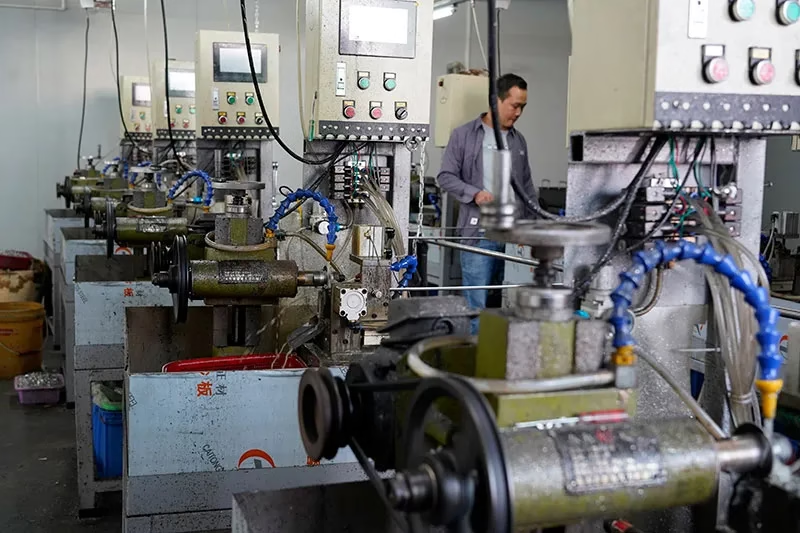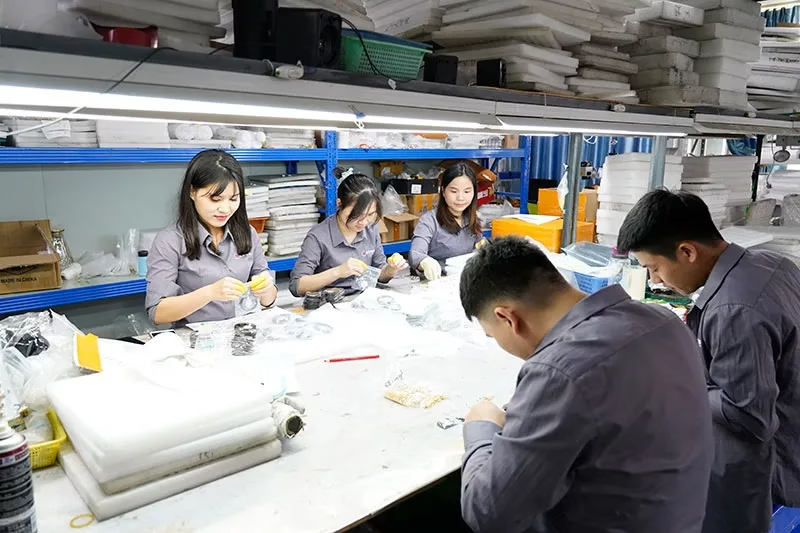
Stainless steel jewelry has emerged as one of the fastest-growing segments in the global fashion jewelry market. This is owing to many advantages: ultimate durability, corrosion resistance, low price, and a sleek, modern look.

However, manufacturing stainless steel jewelry is not as simple as it seems. Stainless steel is much harder with better resistance to deformation than precious metals like gold and silver. Even though this makes it great for everyday wear, this also gives rise to specific production issues.
Quite a number of the usual defects would probably arise without good production techniques, correct material verification, and quality control procedures. These would throw a shadow both over the appearance and over the longevity of the jewelry.
Learning about these issues then helps jewelry brands, wholesalers, and retailers ensure their products come from reliable manufacturers who can guarantee consistent product quality.
1. Surface and Finishing Issues
Why Surface Finishing Is Critical in Stainless Steel Jewelry
Surface finishing plays a major role in the overall appearance and perceived quality of stainless steel jewelry. Because stainless steel is harder than traditional jewelry metals, achieving a smooth mirror finish requires specialized polishing equipment and multiple finishing stages.
If polishing is not done correctly, visible surface defects can easily occur.
Common Surface Defects
Typical surface finishing problems include:
- Scratches or abrasions
- Uneven polishing patterns
- Dull or cloudy surfaces
- Orange-peel textures after buffing
Pitting Defects and Porous Areas
Pitting defects appear on the surface of metals as small, round holes. These defects happen from trapped gas during the casting process or impurities found within the stainless steel alloy.
While small pitting defects are often difficult to see, they will affect the overall appearance of polished jewelry.
Buffing Marks and Polishing Lines
Swirls and drag marks (buffing marks) may appear on metal surfaces as a result of improper polishing techniques. Worn-out polishing wheels used during buffing can also produce these defects when excess pressure is applied.
Scratching and Abrasions During Manufacturing
Stainless steel is very hard, and therefore, deep scratches found in the softest part of the metal can often be impossible to remove after being created. Spray coatings used to protect polished surfaces can easily cause permanent damage to the surface due to mishandling during manufacturing processes.
How Professional Manufacturers Prevent Surface Defects
Experienced jewelry factories prevent surface defects by implementing:
- Multi-stage polishing processes
- Regular replacement of polishing wheels
- Clean finishing environments
- Protective handling during production procedures
These measures help ensure a smooth, consistent finish on every piece.
2. Plating and PVD Coating Problems
Why PVD Coating Is Widely Used in Stainless Steel Jewelry
Many stainless steel jewelry products feature gold, black, or rose gold finishes created through PVD (Physical Vapor Deposition) coating. Compared with traditional electroplating, PVD coatings provide better durability and stronger color stability.
However, poor coating control can still lead to several quality problems.
Common Plating Defects
Peeling or Flaking Coating
When a plated layer begins to peel or flake, the most common cause is poor surface preparation. If oils or polishing compounds remain on the metal surface, the coating cannot bond properly.
Color Inconsistency
Color variations across the same production batch may occur when the gas mixture or temperature inside the PVD vacuum chamber fluctuates.
Low Wear Resistance
If the coating thickness is too thin—usually measured in microns—the plated layer may wear away quickly during daily use, revealing the silver-colored stainless steel beneath.
Best Practices to Ensure Durable PVD Coatings
Reliable manufacturers improve coating quality through:
- Ultrasonic cleaning before plating
- Controlled vacuum chamber temperature
- Consistent coating thickness monitoring
- Batch color inspection procedures
These practices ensure a uniform and long-lasting finish.
3. Material and Stainless Steel Grade Issues
Not All Stainless Steel Is the Same
One of the most overlooked quality risks in stainless steel jewelry manufacturing is the use of incorrect material grades. While different stainless steel types may look identical, their chemical composition and performance can vary significantly.
Differences Between 304 and 316L Stainless Steel
Two common materials used in jewelry manufacturing are 304 stainless steel and 316L stainless steel.
Corrosion Resistance Differences
316L stainless steel contains molybdenum, which significantly improves corrosion resistance. This makes it better suited for jewelry exposed to sweat, humidity, or seawater.
Skin Compatibility and Hypoallergenic Properties
316L stainless steel is often referred to as surgical-grade stainless steel because it offers excellent skin compatibility and is generally considered hypoallergenic.
Lower-grade stainless steel may release small amounts of nickel, which can cause skin irritation for sensitive wearers.
How to Verify Stainless Steel Quality
Professional manufacturers verify material quality through several testing methods.
XRF Metal Composition Testing
XRF (X-ray fluorescence) analysis testing the chemical composition of the metal to confirm the correct stainless steel grade.
Material Certification and Supplier Verification
Reputable factories also request material certification from their steel suppliers and conduct internal inspections before production begins.
4. Structural and Mechanical Defects
Why Structural Integrity Matters in Jewelry Durability
Many jewelry pieces contain multiple components such as chains, clasps, links, or stone settings. Weak connections or poor assembly can reduce the durability of the final product.
Common Mechanical Problems
Brittle Welding or Weak Joints
If improper welding techniques are used, joints may become brittle and break under stress. Incorrect flux or overheating during soldering can weaken the connection.
Sharp Edges and Burrs
Burrs or sharp edges inside rings or on clasp components often occur when the final deburring or tumbling stage is skipped.
Loose Stones or Decorative Components
Stainless steel is less malleable than precious metals like gold. If stone settings are not cut precisely, the metal may not hold the stone securely, causing stones to loosen over time.
Manufacturing Techniques That Improve Structural Strength
Professional manufacturers improve structural reliability by using:
- Precision laser welding
- Tumbling and edge-smoothing processes
- Secure stone-setting techniques
- Mechanical durability testing
These processes ensure the jewelry remains durable during daily wear.
5. Quality Control Failures in Jewelry Production
Typical Quality Control Issues in Stainless Steel Jewelry
Even when production methods are well designed, weak quality control procedures can allow defective products to reach customers.
Typical problems include:
- Inconsistent polishing quality
- Undetected plating defects
- Loose components
- Packaging damage during shipping
Professional Inspection Standards
Reliable jewelry manufacturers use multiple inspection stages to ensure product quality.
Incoming Material Inspection
Raw materials are checked before production begins to verify the correct stainless steel grade.
In-Process Production Checks
Quality inspectors examine products during various manufacturing stages to detect potential problems early.
Final Product Inspection
Finished jewelry pieces are visually inspected to ensure they meet quality standards.
AQL (Acceptable Quality Limit) Inspection
Many factories use AQL inspection standards to check product batches before shipment.
How Jewelry Brands Can Avoid Quality Problems When Sourcing
For jewelry brands and wholesalers, choosing the right manufacturing partner is essential.
Several best practices can help reduce sourcing risks.
Request a Golden Sample Before Mass Production
A Golden Sample is a perfect reference prototype used as the standard for all future production.
Verify Material Quality With XRF Testing
Requesting XRF testing reports helps confirm that the jewelry is made from genuine 316L stainless steel.
Evaluate Polishing and Coating Quality
Carefully inspect sample pieces to evaluate surface finishing, coating durability, and overall craftsmanship.
Choose an Experienced Stainless Steel Jewelry Manufacturer
Factories specializing in stainless steel jewelry typically have better equipment, production expertise, and quality control systems.
Frequently Asked Questions About Stainless Steel Jewelry Quality
What is the most common defect in stainless steel jewelry?
Surface finishing defects such as scratches, polishing marks, or dull surfaces are among the most common issues in stainless steel jewelry manufacturing.
Why does gold plating fade on stainless steel jewelry?
Gold plating may fade if the coating thickness is too thin or if the metal surface was not properly cleaned before the PVD coating process.
Is 316L stainless steel better than 304 for jewelry?
Yes. 316L stainless steel offers better corrosion resistance, improved skin compatibility, and greater durability, making it the preferred material for jewelry production.
How do manufacturers test stainless steel jewelry quality?
Manufacturers typically use methods such as XRF metal composition testing, supplier material certification, and multi-stage quality inspections during production.
Conclusion: Ensuring High-Quality Stainless Steel Jewelry Manufacturing
Jewelry made of stainless steel is an extremely durable product with the possibility of numerous designs available, making it an economical solution for brand-name companies and consumers. However, ensuring quality in jewelry manufacturing can only be ensured through careful attention to material selection and ensuring that you select the right manufacturing process for each piece of jewelry you create.
Surface defects, plating failures, incorrect grade of stainless steel, and structural weaknesses will result if quality standards are not adhered to.
A solid foundation of knowledge about these issues, combined with working with manufacturers who utilize the highest quality of 316L stainless steel, use advanced polishing techniques, and practice structured inspection procedures, will ensure that jewelry companies and wholesalers can provide consistent quality in their products so that they can develop positive and long-term relationships with their customers.

With over 10 years of experience in the stainless steel jewelry industry, Lydia Ling brings deep industry knowledge and hands-on market expertise to her role. As an accomplished Sales Manager, she has a strong understanding of product development, manufacturing processes, and global customer needs. Through the company blog, Lydia shares practical insights and industry know-how to help readers better understand stainless steel jewelry and make informed business decisions.