Colour customisation drives brand differentiation in today’s crowded jewellery market. Modern consumers demand a diverse spectrum of finishes without sacrificing wear resistance or skin safety.
Multi-Colour PVD (Physical Vapour Deposition) coating solves this. This advanced vacuum technology forms an ultra-hard ceramic barrier over base metals, protecting designs from scratches while delivering a highly stable, premium colour palette.
The Technology: Sputtering and Shifting Hues
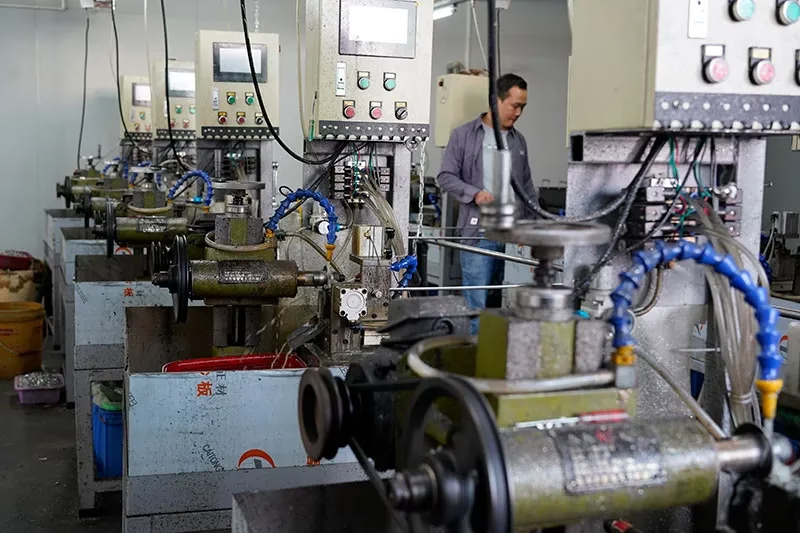
PVD is a dry, clean-room coating process operating at the molecular level. Inside industrial vacuum chambers, solid metal targets are vaporised into a plasma state and then deposited atom-by-atom onto the jewellery.
The PVD Process Flow:
- Target Prep: High-purity metals (Titanium, Zirconium, or Chromium) are prepped.
- Chamber Activation: The vacuum sputtering system is sealed and turned on.
- Gas Injection: Reactive gases (Nitrogen, Oxygen, or Acetylene) are introduced.
- Molecular Bonding: Vaporised atoms form a dense, permanent film on the jewellery.
- Quality Check: Pieces emerge with a highly resilient surface.
Why Surface Finish and Film Thickness Matter
- Base Topography: PVD films are micro-thin (0.1 to 2.0 microns) and perfectly copy the underlying metal. A mirror-polished base yields a high-gloss shine, while sandblasted metal produces a matte satin finish.
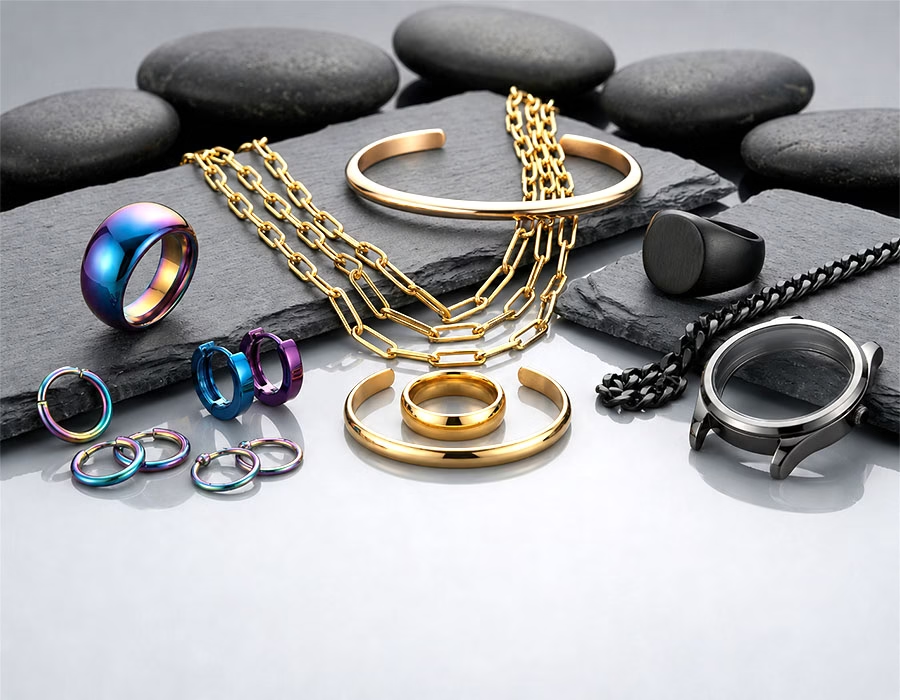
- Colour Mechanics: Standard golds or blacks stay uniform across varying film thicknesses. However, speciality shades like blues, purples, and rainbow iridescence rely on precise oxide layers to refract light into distinct colour spectra.
The Jewellery PVD Colour and Material Guide
This quick-reference matrix breaks down the exact material targets, visuals, and best use cases for industrial PVD finishes:
| PVD Color Option | Target Material / Gas Blend | Visual Vibe | Best Use Cases | Durability Rating |
| Original Steel Color | Uncoated 316L Stainless Steel | Clean, silver-gray metallic | Minimalist everyday bands, unisex staples | High native hardness; highly scratch-proof |
| PVD Rhodium | High-purity Rhodium alloy | Bright, ultra-white mirror shine | Premium rings, classic bridal alternatives | Exceptional resistance to scuffs and tarnish |
| PVD Gold (18K/24K) | Titanium Nitride + Real Gold | Warm, high-end traditional luxury | Heavy paperclip chains, classic hoop earrings | Outstanding; up to 4x harder than chrome |
| Rose Gold | Titanium Aluminum blend | Soft, elegant copper-pink | Stacking rings, delicate layering necklaces | High; requires automated gas balancing |
| Jet Black / Gun Black | Titanium Carbonitride | Sleek matte or high-gloss black | Men’s signet rings, heavy street-style chains | Very High; pairs perfectly with DLC hardening |
| Sleek Gunmetal | Chromium / Zirconium alloy | Edgy, deep smoke gray | Luxury watch casings, contemporary accessories | Very High; excellent protection against scuffs |
| Vibrant Blue | Titanium / Chromium Oxide | Deep sapphire to royal blue | Statement pendants, trend-driven youth lines | High; completely relies on strict thickness control |
| Regal Purple | Chromium Nitride base | Rich, highly distinct royal purple | Body jewelry, piercing lines, capsule drops | High; exceptional resistance to friction |
| Rainbow / Aurora | Multi-layer material stack | Iridescent oil-slick color shift | Septum clickers, festival jewelry, limited drops | Medium-High; requires multi-angle rotation |
Smart Two-Tone Customisation
Advanced manufacturing allows brands to combine multiple finishes on a single item. By using precise masking steps during consecutive vacuum cycles, factories execute eye-catching multi-tone looks:
- Gold + Jet Black: A high-contrast combination that is a top bestseller for Custom Stainless Steel Rings.
- Rose Gold + Original Steel: A softer, highly commercial dual-tone style perfect for women’s minimalist lines.
- Black + Rainbow Accents: A bold setup where the iridescent rainbow gradient is hidden inside the inner grooves or links of a sleek black band.
The Business Value: Why Brands Win with PVD
1. Seamless SKU Expansion
Instead of funding separate casting moulds for every colour option, you can split a single base design into multiple PVD colour batches. This instantly expands your catalogue and minimises initial tooling overhead.
2. Hypoallergenic Security
Traditional electroplating relies on cheap nickel or copper layers that leach into the skin, causing greening or irritation. High-purity PVD forms a bio-safe shield over premium base metals. To see why the right base matters, read our breakdown of 316L vs 304 Stainless Steel Jewellery.
3. A Massive Sustainability Edge
PVD is a completely dry, green manufacturing method. Unlike legacy electroplating, it produces zero hazardous chemical runoff and utilises energy much more efficiently, giving your brand a powerful sustainability story for modern buyers.
Frequently Asked Questions
Will PVD jewellery fade or turn the skin green?
No. Skin greening happens when low-grade metals like brass or copper oxidise against the skin. PVD molecularly bonds bio-safe compounds to a stable base, preventing fading or flaking under normal wear.
Can custom PVD colours be engineered to match our brand?
Yes. By fine-tuning the target materials, gas ratios, and vacuum cycle times, manufacturers can engineer custom shades like champagne gold or vibrant corporate blues. For technical insights on getting yellow gold right, check our guide on How to Achieve a True 18K Gold Colour on Stainless Steel.
How should customers clean and care for PVD pieces?
PVD jewellery is waterproof and sweat-resistant. To protect the optical layers, avoid pool chlorine, harsh industrial abrasives, or heavy ultrasonic cleaners. Wipe pieces down with a soft microfiber cloth and warm, mild soapy water.
Supply Chain Checklist
Verify that your manufacturing partner provides these three essential technical documents for retail compliance:
- RoHS and REACH Certification: Demonstrates that your inventory is completely lead- and nickel-free.
- 48- to 96-Hour Salt Spray Testing: Verifies long-term resistance to tarnish and corrosion.
- Cross-Hatch Tape Adhesion Testing: Guarantees the film won’t peel or flake under stress.
Sourcing Feasibility Evaluation
To optimise the coating recipe for your upcoming manufacturing run, please consider the physical requirements of your specific base metals:
With over 10 years of experience in the stainless steel jewelry industry, Lydia Ling brings deep industry knowledge and hands-on market expertise to her role. As an accomplished Sales Manager, she has a strong understanding of product development, manufacturing processes, and global customer needs. Through the company blog, Lydia shares practical insights and industry know-how to help readers better understand stainless steel jewelry and make informed business decisions.